

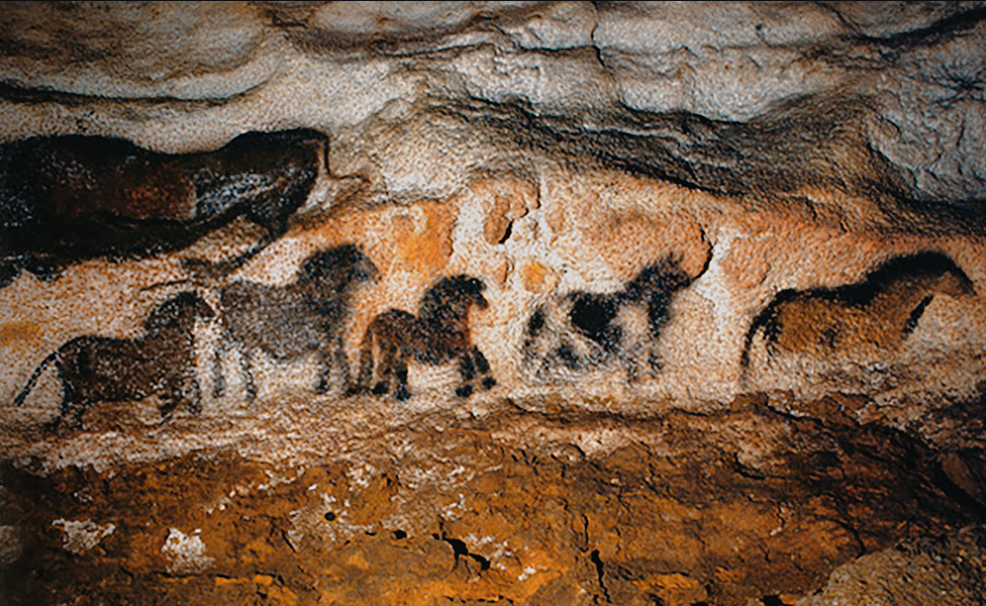
Hidden deep in the Dordogne region of France lies one of humanity’s greatest artistic treasures — the Lascaux cave paintings. Created between 17,000 and 12,000 years ago, these extraordinary artworks offer a window into prehistoric life and the minds of early humans. From majestic bulls to mysterious symbols, the Lascaux caves preserve a story that continues to intrigue archaeologists, historians, and art lovers alike.
Here are 12 fascinating facts you need to know about the world-famous cave paintings.
1. The Discovery Was Purely Accidental
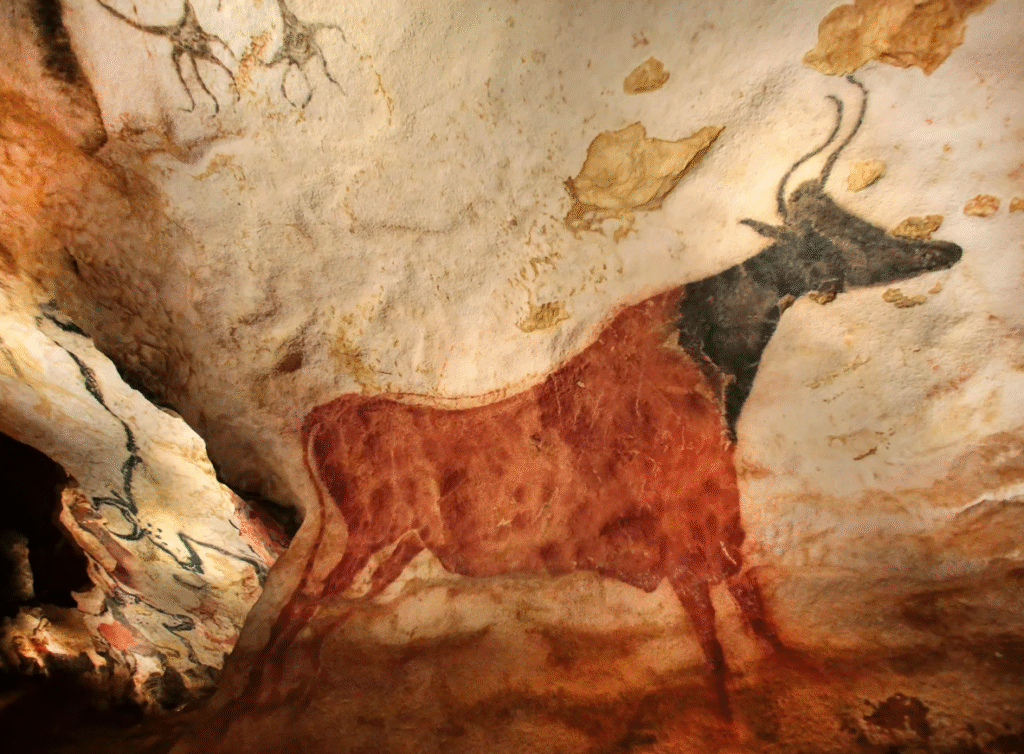
- In September 1940, four schoolboys stumbled upon the Lascaux caves while chasing their lost dog.
- Inside, they found walls covered in hundreds of paintings and engravings.
- Excited, they began charging a small admission fee to local villagers before authorities stepped in.
2. Archaeologist Henri Breuil Confirmed Their Authenticity
- Henri-Édouard-Prosper Breuil was among the first to scientifically examine the cave.
- He authenticated the paintings as parietal art from the Upper Paleolithic period.
3. Dordogne Is a Hotspot for Prehistoric Art
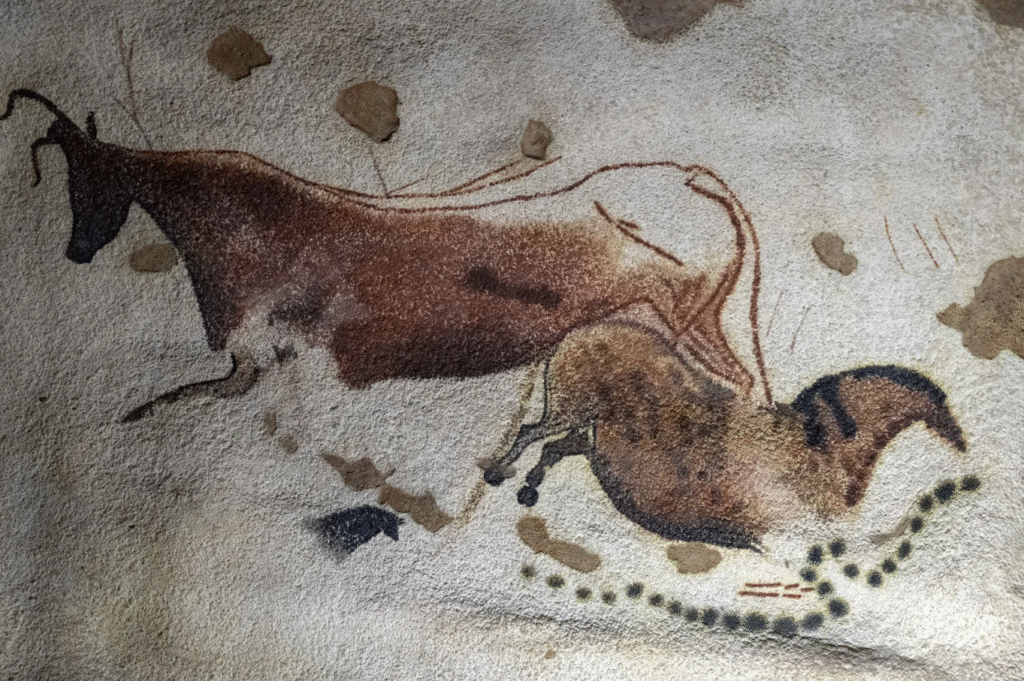
- The Vézère Valley, where Lascaux is located, has:
- 147 Paleolithic sites
- 25 decorated caves
- UNESCO declared the valley a World Heritage Site in 1979.
4. Three Distinct Periods of Occupation
- Evidence suggests Lascaux was used during three different phases:
- Charcoal remains in the Nave and Shaft.
- Artefacts matching the period of the paintings.
- Brief habitation at the cave entrance.
- Only the first few meters were ever “lived in.” The deeper chambers were sacred, reserved for art and rituals.
5. Artists Used Unique Tools & Techniques

- No brushes were found, but evidence points to:
- Moss or animal hair for applying paint.
- Hollow bones for blowing pigment onto walls.
- Engravings, carvings, and paintings layered over centuries by different artists.
6. Natural Minerals Created the Pigments
| Color | Mineral Used | Example Animal Depiction |
|---|---|---|
| Red | Hematite | Horses, stags |
| Yellow | Goethite | Deer, wild cattle |
| Black | Manganese oxide (locally abundant) | Bulls, bison |
7. Scaffolding Was Likely Used
- Some paintings are as high as 3.5 meters (11.4 ft).
- Interlocked beams found suggest scaffolding was built.
- Painting was a team effort — requiring light holders, scaffold builders, and artists.
8. Lamps Lit the Way
- A sandstone lamp with traces of juniper wick was found.
- It revealed how artists lit the cave while painting.
- Scholars suggest the flickering flames may have made the animals appear to “move” — a proto-cinematic effect.
9. Sophisticated Tools & Jewelry Found
- Artefacts include:
- Grinding stones and mortars for pigments.
- Flint tools for engraving.
- Bone needles and awls.
- 16 fossilized shells (3 with drilled holes for jewelry).
- Shells originated hundreds of kilometers away — proof of trade networks.
10. The Mysterious Bird-Man
- Lascaux contains only one complete human-like figure.
- The “bird-man” scene shows:
- A man with a bird-like head falling backward.
- A bison, a bird-headed staff, and a defecating rhino.
- Its meaning remains a mystery — possibly linked to rituals or mythology.
11. The Hall of Bulls Houses the Largest Animal Painting
- Features four enormous black bulls (aurochs).
- The largest measures 17 feet long — the biggest known depiction of an animal in cave art.
- Demonstrates advanced use of perspective.
12. The Caves Are Closed, but Replicas Exist
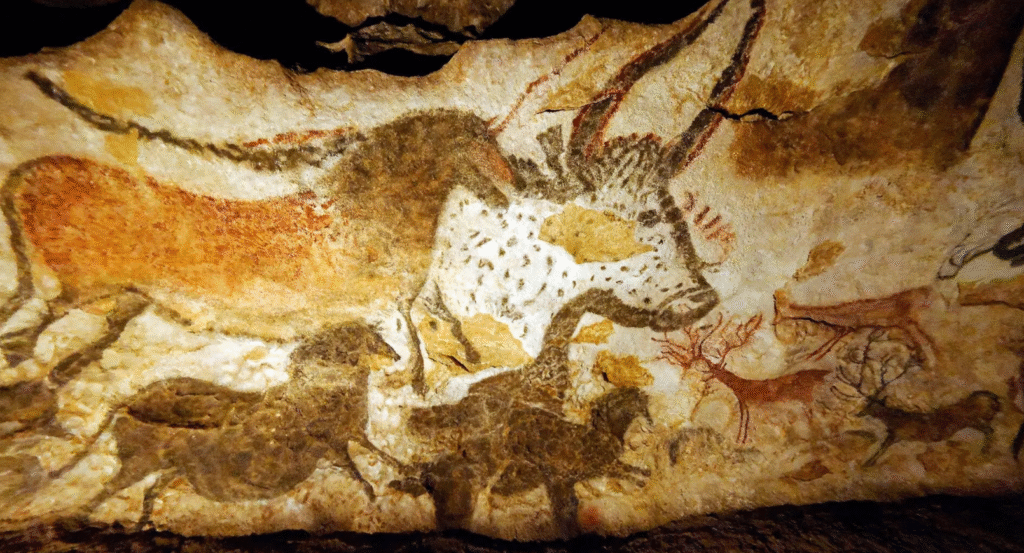
- Opened to the public in 1948 but closed in 1963 due to damage from lights, visitors, and fungus.
- Lascaux II (1983): Replica of Hall of Bulls and Axial Gallery.
- Lascaux IV (2016): Full cave replica with modern exhibits.
- Virtual 3D tours are available online.
Conclusion
The Lascaux cave paintings remain one of the most captivating artistic legacies of early humans. They reflect not only creativity but also ritual, community, and the first sparks of storytelling through images. Though we may never fully decode their meaning, their beauty ensures they will continue to inspire generations to come.