
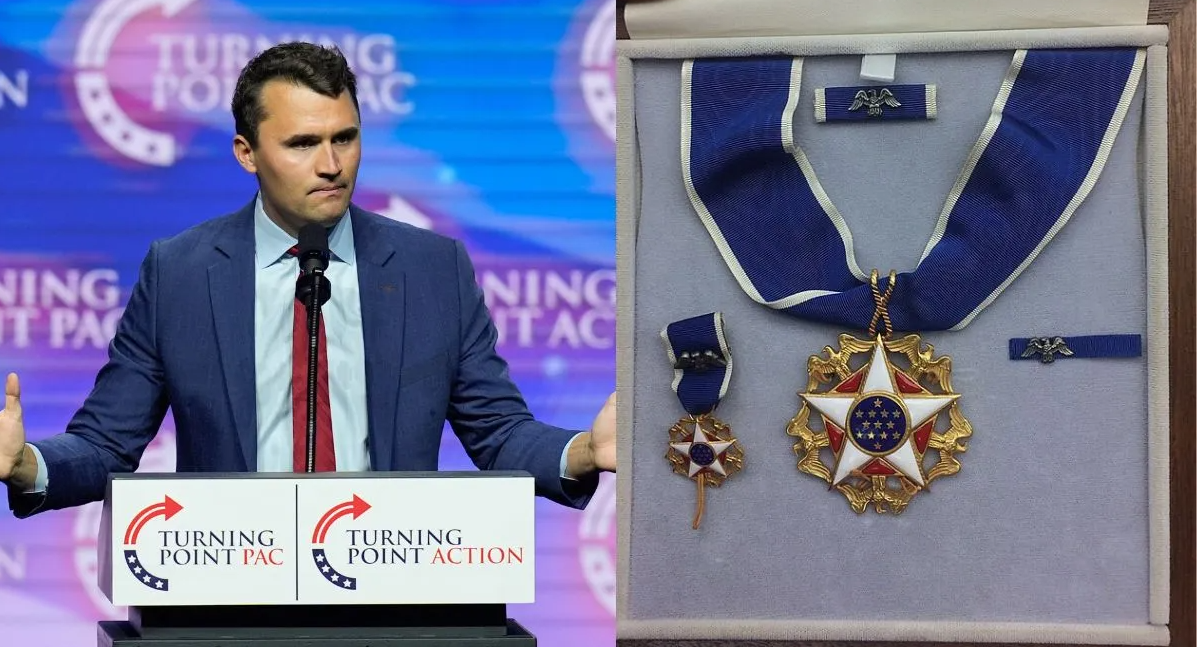
U.S. President Donald Trump announced his intention to posthumously award the Presidential Medal of Freedom to Charlie Kirk, the conservative activist who was fatally shot while speaking at Utah Valley University. The medal is the United States’ highest civilian honor, traditionally awarded to individuals who have made extraordinary contributions to society, the nation, or the world.
This announcement has sparked discussion not only about Charlie Kirk’s life and legacy, but also about what the Presidential Medal of Freedom actually means—and how it is awarded.
What Is the Presidential Medal of Freedom?
Here are the key facts about the medal:
| Feature | Description |
|---|---|
| Established | 1963, by President John F. Kennedy. |
| Purpose | To recognize individuals who have made especially meritorious contributions to: security or national interests of the U.S., world peace, cultural or significant public/private endeavors. |
| Eligibility | Any person—not necessarily a U.S. citizen; civilian roles, also military personnel in some cases. |
| Awarding Body | The President of the United States, entirely at his/her discretion. No formal, fixed nomination process. |
| Number of Recipients | As of early 2025, awarded over 670 times. |
| With Distinction | A special form (higher honor) used in some cases for individuals deemed to deserve additional recognition. |
Trump’s Announcement Regarding Charlie Kirk
- Trump said Kirk will be posthumously granted the Presidential Medal of Freedom.
- He described Kirk as “a giant of his generation, a champion of liberty and an inspiration to millions.”
- The announcement came during a 9/11 remembrance ceremony at the Pentagon.
Past Notable Recipients
Here are a few names who have received the medal, to help understand its prestige:
- Martin Luther King Jr.
- Mother Teresa
- Jackie Robinson
- Former President Joe Biden (as a recipient)
- Others include artists, activists, scientists, heads of state, etc.
Why This Matters
- The award is symbolic of national recognition. It’s not just about status—it reflects public service, impact, or cultural significance.
- Granting it posthumously to Charlie Kirk adds political weight, especially amid controversies around political violence and free speech.
- Since the award is discretionary, it can be controversial depending on who receives it and on what grounds.
Criticisms & Controversies
- Because the President has full discretion, some view the selection process as politically influenced.
- Some past recipients have been divisive figures, leading to public debate over whether their contributions meet the intended criteria.
- There is no formal revocation process once the medal is awarded.
Conclusion
The Presidential Medal of Freedom remains the highest civilian honor in the U.S., granted for exceptional contributions across public service, culture, science, and beyond. With Donald Trump announcing that Charlie Kirk will be posthumously awarded this medal, the spotlight is once again on what the honor means—and how its recipients reflect presidential values and national priorities.